
Key figures
- Outside diameter (mm)1500
- Pitch (mm)540/720
- Pitch-to-dia. ratio0.75/0.6/0.45
- Cross slope (°)9
Figures are for the base model. All models in this family are listed below.
Overview
What it is
A spiral chute is a tall, static concentrator. Slurry is fed at the top and runs down a helical trough; heavy minerals settle to the inner, lower part of the stream while the lighter ones are thrown to the outer edge, and the two leave through separate launders at the bottom. There is nothing to drive: after the feed pump, the separation runs on gravity and the wash water.
Build
The 5LL troughs are high-strength FRP — glass-fibre reinforced plastic — which is corrosion resistant, abrasion resistant, light, and does not rust in a wet plant. Each unit is 4–5 spiral turns connected through a central column and supplied as an integral vertical assembly, so it is stood up on its frame and piped, not built piece by piece on site.
Where it is used
Roughing low-grade ore — preconcentrating the valuable mineral and discarding most of the gangue before the circuit spends money on it. Retreatment of tailings, recovering values from an old dam or an existing plant's tailings. Placer and beach sand, roughing and cleaning the heavy minerals. And in a combined flowsheet with a shaking table or a centrifugal concentrator, where the spiral does the roughing duty and the table cleans the concentrate.
Why it needs no power
The whole separation depends on slurry gravity and heavy-media flow, with no motor supplied and no energy consumed, so the running cost is essentially zero. A single unit handles several tonnes an hour and stands vertically, which is why the floor area per tonne is small — the machine uses height instead of footprint, and that suits low-grade ore and tailings where the tonnage is large and the value per tonne is small.
Structure and maintenance
No moving parts, so there is no wear on bearings, no drive to align and nothing to lubricate. The FRP trough resists both corrosion and abrasion, and day-to-day attention is a wash-out — the unit needs almost no maintenance, and the investment is low because there is no electrical installation, no control system and no complex foundation.
How the separation works
Feed first: slurry is distributed evenly into the head of the spiral from the feed box. Flow and stratification: as the pulp runs down, particle weight, gravity, the water flow, the friction of the trough floor and the flow resistance combine to stratify it — heavy minerals in the lower layer, light ones above. Separation: the lower layer of heavy particles feels more friction, moves slowly and is held by a small centrifugal force, so it stays to the inner side; the upper layer of light particles rides the water surface, moves fast, feels a larger centrifugal force and is thrown outward. Cut at the end: at the discharge end the minerals on different trajectories are led by splitter plates into concentrate, middlings and tailings launders, and the splitter plates are adjustable.
Core components
The spiral trough — 4 to 5 FRP turns with a wear-resistant liner, cross-section shaped as a cube parabola to form the laminar flow and the mineral stratification. The central column — a steel column that supports and aligns every turn, keeping them concentric and vertical. The feed box at the top, which receives the pulp and spreads it evenly into the trough. And the product launder and splitter assembly at the base, usually an annular multi-product launder with adjustable splitter plates for concentrate, middlings and tailings.
Choosing a size
Outside diameter sets the tonnage: 400 mm for 0.15–0.2 t/h up to 1500 mm for 8–16 t/h. Everything else moves with it — the 1500 runs a 540 or 720 mm pitch, the 1200 a 900/720/540 set, and the cross slope is 9° throughout. Each unit takes 2 to 4 spiral starts, which is the other way to raise capacity without buying a second machine: more starts on the same frame and the same footprint.
Notes
Capacity is quoted per unit and moves with the material and the feed size — the note on the series sheet says the figures vary with ore type and that dimensions and weight are subject to the actual machine. Ranges are shown low to high; where the sheet prints them the other way round (0.3-0.02 mm, 4-2 starts) the meaning is the same. No weight is published in this table, so ask for the shipping weight per size if you are costing freight. Feed preparation matters more than anything on the machine: a steady, well-mixed pulp at a consistent density is what keeps the bands stable.
All models
| Parameter | 5LL-1500 | 5LL-1200 | 5LL-900 | 5LL-600 | 5LL-400 |
|---|---|---|---|---|---|
| Outside diameter (mm) | 1500 | 1200 | 900 | 600 | 400 |
| Pitch (mm) | 540/720 | 900/720/540 | 675/540/405 | 450/360/270 | 240/180 |
| Pitch-to-dia. ratio | 0.75/0.6/0.45 | 0.75/0.6/0.45 | 0.75/0.6/0.45 | 0.75/0.6/0.45 | 0.6/0.45 |
| Cross slope (°) | 9 | 9 | 9 | 9 | 9 |
| Max. spiral starts per unit | 2–4 | 2–4 | 2–4 | 3 | 2 |
| Feed size (mm) | 0.02–0.3 | 0.02–0.3 | 0.02–0.3 | 0.02–0.2 | 0.02–0.2 |
| Feed density (%) | 25–55 | 25–55 | 25–55 | 25–55 | 25–55 |
| Capacity (t/h) | 8–16 | 4–6 | 2–3 | 0.8–1.2 | 0.15–0.2 |
| Overall size L×W×H (mm) | 1560×1560×5230 | 1360×1360×5230 | 1060×1060×4000 | 700×700×2600 | 460×460×1500 |
Swipe the table sideways to see every column →
Related equipment
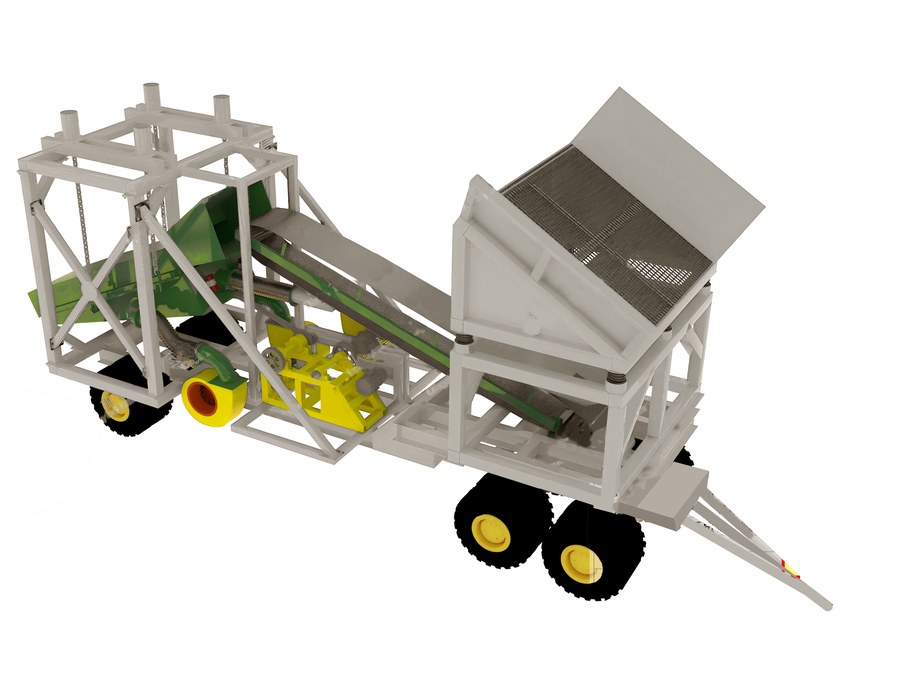 80–100 t/h Mobile Dry Gold Separator1 models
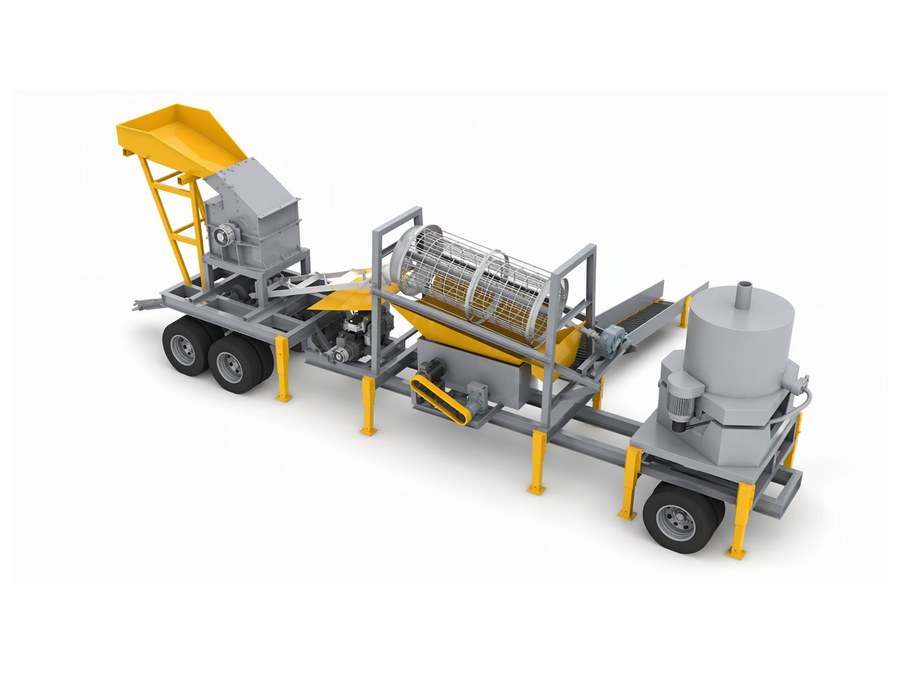 5–10 t/h Weathered Sand Gold Plant2 models
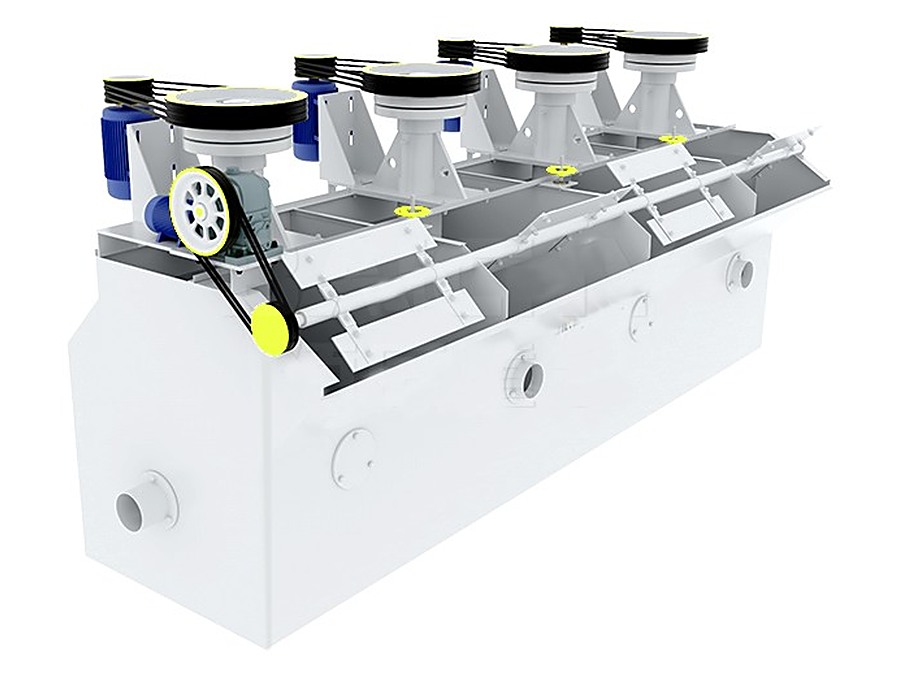 SF & XJK Series Flotation Machines11 models